




Bison Conservation Landscapes
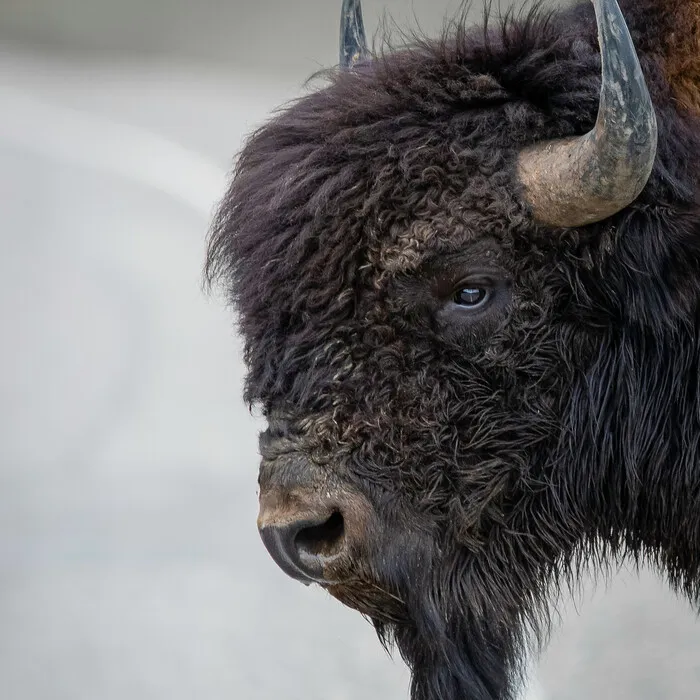
American Bison were once one of the planet's most abundant large mammals, with tens of millions of them ranging from Alaska south to Mexico, and from California to the eastern seaboard. The majority of them were found in the Great Bison Belt, a grassland spreading south through the middle of the North American continent from Alaska to Mexico. Bison were critical to the spirituality and lifeways of many Indigenous communities, and are the national mammal of the United States.
View Map
Beginning in the 1870s century, bison were deliberately exterminated as part of the displacement of Native Americans from their ancestral lands, and their numbers had plummeted to under 600 individuals by 1890. The last remaining free-ranging plains bison were located in what is today Yellowstone National Park, with other herds on private ranches. From that time, bison conservation began in earnest, with one of the founding conservation herds being managed by WCS in its former avatar, the New York Zoological Society.
Today, over 20,000 bison exist in conservation herds, largely in Canada and Alaska. However, there are still many opportunities for restoring their populations across North America. Here we show maps and data from a new 20-year analysis of bison conservation landscapes at range-wide, national, and landscape scales using the Google Earth Engine and satellite imagery from NASA and the European Space Agency. Bison conservation landscapes are large, intact blocks of habitat suitable for bison. We recognize two main types: species landscapes, where free-ranging bison currently exist, and restoration landscapes, where bison have not yet been fully re-established. We also map fragments of habitat where bison have been or may be re-established.
How are bison doing today?
As of the 1st of January 2020, there were 3 Bison Conservation Landscapes in the United States and Canada. These landscapes include two large areas occupied by wood bison, as well as the Yellowstone/Grand Teton landscape occupied by plains bison. While these landscapes are critical, they represent a mere fraction of the former range. However, there are still large areas that remain suitable for bison. The future of bison conservation will involve working with private landowners, Indigenous groups, and state and federal authorities in the US and Canada to link bison populations, allowing them to once again naturally restore the prairies they once roamed in.
How has bison habitat changed in the 21st century?
Bison habitat has held relatively constant over the last 20 years, with a decline in available habitat of roughly 7%, most of that within the United States. The bison landscapes have remained largely unchanged, though bison populations have generally risen over that time. There have been several bison reintroduction efforts that have resulted in established herds, but those herds are generally restricted by fences or otherwise managed intensively, and therefore do not yet meet the criteria for being a conservation landscape.